Catfish: A Bouncy Script for Playful Design
A Typeface That Moves
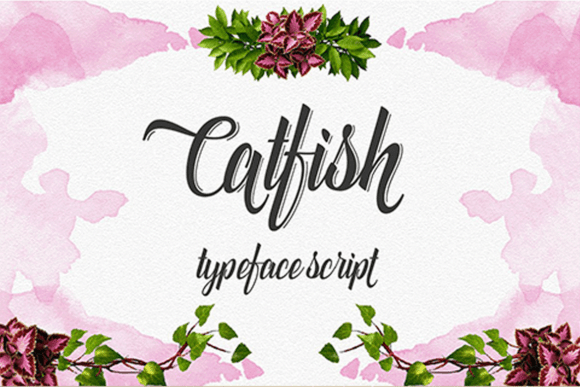
Some fonts sit quietly on the page. Others seem to bounce right off it. The Catfish typeface is firmly in the second camp. It’s a high-energy script font that feels like it was drawn with a bold, felt-tip marker, its thick, rounded strokes creating a rhythm that’s impossible to ignore. Part of the "Smart Font Collection," this isn't a typeface for quiet moments. It’s designed for projects that need a shot of optimism and friendly energy. The clean, monolinear structure is the secret to its success—it delivers all the charm of a hand-crafted letter while maintaining excellent legibility, even at smaller sizes. This makes it a surprisingly versatile premium font for a wide range of applications.
The personality of the Catfish font is cheerful and unpretentious. It doesn’t try to be overly formal or sophisticated. Instead, it leans into a casual, approachable vibe that works exceptionally well for family-oriented brands and any project aiming for a warm, inviting feel. Think of it as the typographic equivalent of a friendly wave or a bright, sunny day. Its visual weight and movement can instantly elevate a design, making it feel more dynamic and engaging without sacrificing the core message.
Where Catfish Truly Shines
Understanding a script font like Catfish is one thing; knowing where to deploy it is another. Its strengths lie in contexts where personality and approachability are paramount. For logo design, particularly for cafes, bakeries, food trucks, or children's brands, Catfish can create an immediate, memorable impression. It communicates fun and accessibility, which can be a powerful differentiator in a crowded market.
Beyond logos, its applications are extensive:
- Branding & Marketing: Use it for vibrant headers on flyers, posters, and social media graphics. It pops beautifully against bright backgrounds and organic shapes. It’s a natural fit for summer event promotions, casual dining menus, and playful merchandise like t-shirts or tote bags.
- Packaging & Editorial Design: On product packaging, especially for artisanal goods or snacks, it adds a hand-crafted, trustworthy feel. In editorial design, it can bring life to feature headlines in magazines or blog banners, drawing the reader in with its energy.
- Digital & Web Design: While primarily a display font, Catfish can be used strategically in web design for hero section callouts, promotional banners, or email subject lines. Its high legibility ensures the message isn’t lost in the flair.
The key is to use it where its personality can breathe. It’s not the font for your entire 50-page legal document, but it’s perfect for the headline that announces a new product line or the header of a community newsletter. It’s a creative font that serves a specific, high-impact role within a broader brand identity.
Practical Guidance for Implementation
Choosing a display font like Catfish requires a bit of practical consideration to ensure it enhances rather than overwhelms your project. First, evaluate the project’s tone. If your goal is to convey professionalism, stability, and authority, a serif font or a clean sans serif font might be a better primary choice. Catfish is for when you want to inject joy, movement, and a personal touch. It’s an excellent tool in your design assets kit for that specific purpose.
Next, consider font pairings. A strong font pairing is crucial for visual hierarchy and readability. Because Catfish has such a distinct personality, it pairs best with neutral, understated typefaces. A simple, geometric sans serif font for body text will let the Catfish headlines shine without creating visual clutter. Avoid pairing it with other highly decorative or script fonts, as they will compete for attention. Test your pairings by seeing how they look in context—a header in Catfish followed by a paragraph in a font like Montserrat or Open Sans can create a balanced and modern typographic layout.
Always review the font’s full character set and any included styles. Many premium fonts come with alternates, ligatures, or stylistic sets that can add even more customization to your work. Finally, for any commercial use—from client projects to merchandise for sale—ensure you have the correct commercial font license. This protects you legally and supports the type designers who create these valuable tools. By following these steps, you can confidently integrate the Catfish typeface into your workflow, using its unique bounce and charm to create designs that are not only visually appealing but also strategically effective.